

They call it the Khumbu Cough. A dry, hacking thing caused by the cold, dusty air. In a camp at Everest Base Camp, it sounds like a chorus. An entrepreneur from Berlin named Klaus is bent over, hands on knees, in the middle of it.
“Good,” says his guide, Pasang, handing him a water bottle. “Now you know. This is real.”
Klaus, between coughs, manages a laugh. He had spent 80,000 euros on an elite MBA. He said the case studies felt like theoretical puzzles. Here, shivering at 5,300 meters, the case study was his own body. The subject was his own will. The cold, the cough, the thinning air, they were not metaphors. They were the curriculum. This was his final exam, and it was brutally physical.
An MBA teaches you to think. A mountain forces you to act. There is a profound difference. In a classroom, you analyze supply chains. On the trail to Everest Base Camp, you are inside one. You watch how a sack of potatoes moves from a truck in Kathmandu, to a porter’s back, to a kitchen in Namche Bazaar, to your plate. You see the fragility and the resilience built into every link. You understand the cost, not from a spreadsheet, but from the sweat on a porter’s brow.
“You learn respect,” Pasang says later, melting snow for water. “Not the kind in an email. Real respect. For the environment. For the people who work here. For your own limits.” Pasang has guided bankers, tech founders, and CEOs. He sees the transformation happen in stages. First, the bravado fades. Then, the frustration sets in. Then, if they are listening, a kind of humility takes root. They realize their money and title mean nothing to the mountain. Only their preparation and their attitude matter.
These lessons in systems and humility are the core credits. The group dynamics are the group project. You cannot fire a teammate on day four of a trek. You must find a way to work with their pace, their mood, and their personality. You learn that the group’s success is your success. The summit is not for the fastest, but for the most cohesive.
Steve Jobs famously sought inspiration outside of technology, in calligraphy and Zen Buddhism. He believed breadth of experience fueled creativity. A mountain trek is the ultimate breadth of experience. It is a total immersion in a world governed by non-digital logic. The logic of weather, of altitude, of human stamina. This forced perspective is the most potent creative spark. The solution to a business bottleneck might not appear during a brainstorming session, but while you are focusing entirely on your footing on a glacial trail.
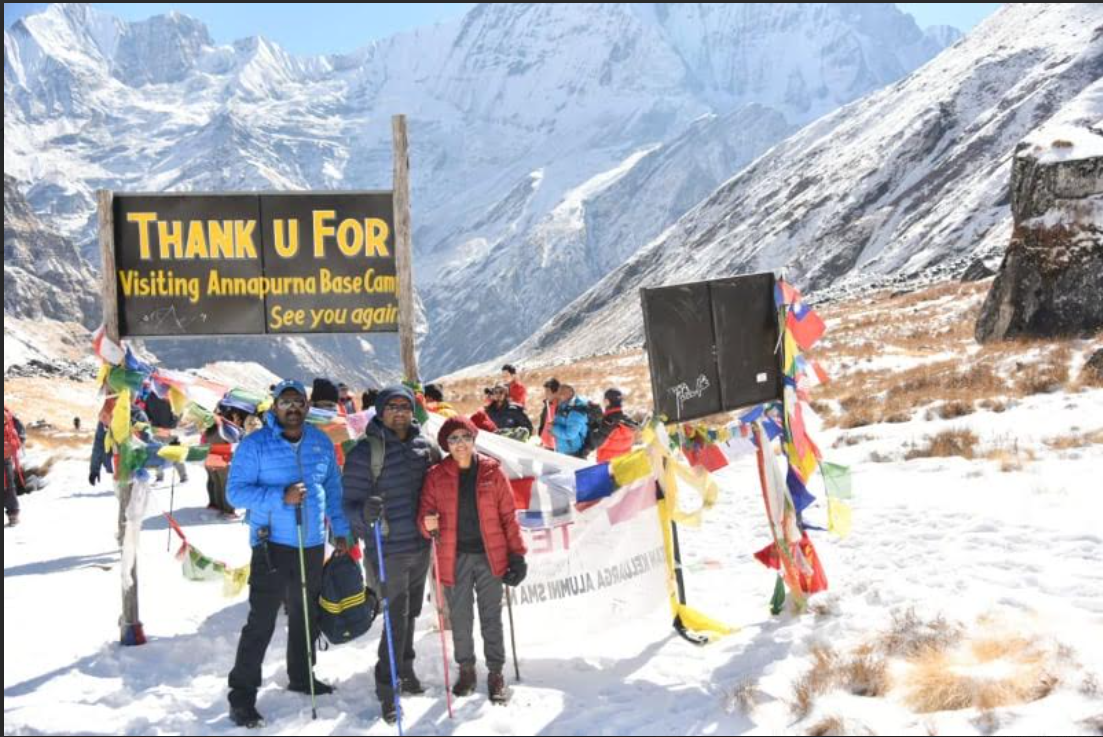
Klaus made it to Base Camp. He took his photo. But the trophy was not in the picture. It was the Khumbu Cough. It was the memory of being reduced to his most basic self, and then discovering he had everything he needed. He learned more about leadership in ten days with Pasang than in two years of business school. He learned that a leader is not the person out front. A leader is the person who makes sure the group has enough water, who shares their sunscreen, and who sets a pace that the slowest can maintain.
That is the degree you earn. It is not on paper. It is in your walk. It is in the quiet knowledge that you have been tested in a fundamental way. The mountain does not give you a grade. It changes your shape. And a trekking agency in Nepal like GloriousHimalaya.com is the professor. They do not just guide you up. They facilitate this entire raw, unvarnished education. They provide the context for the hardest and best business school case study you will ever face. Yourself.