

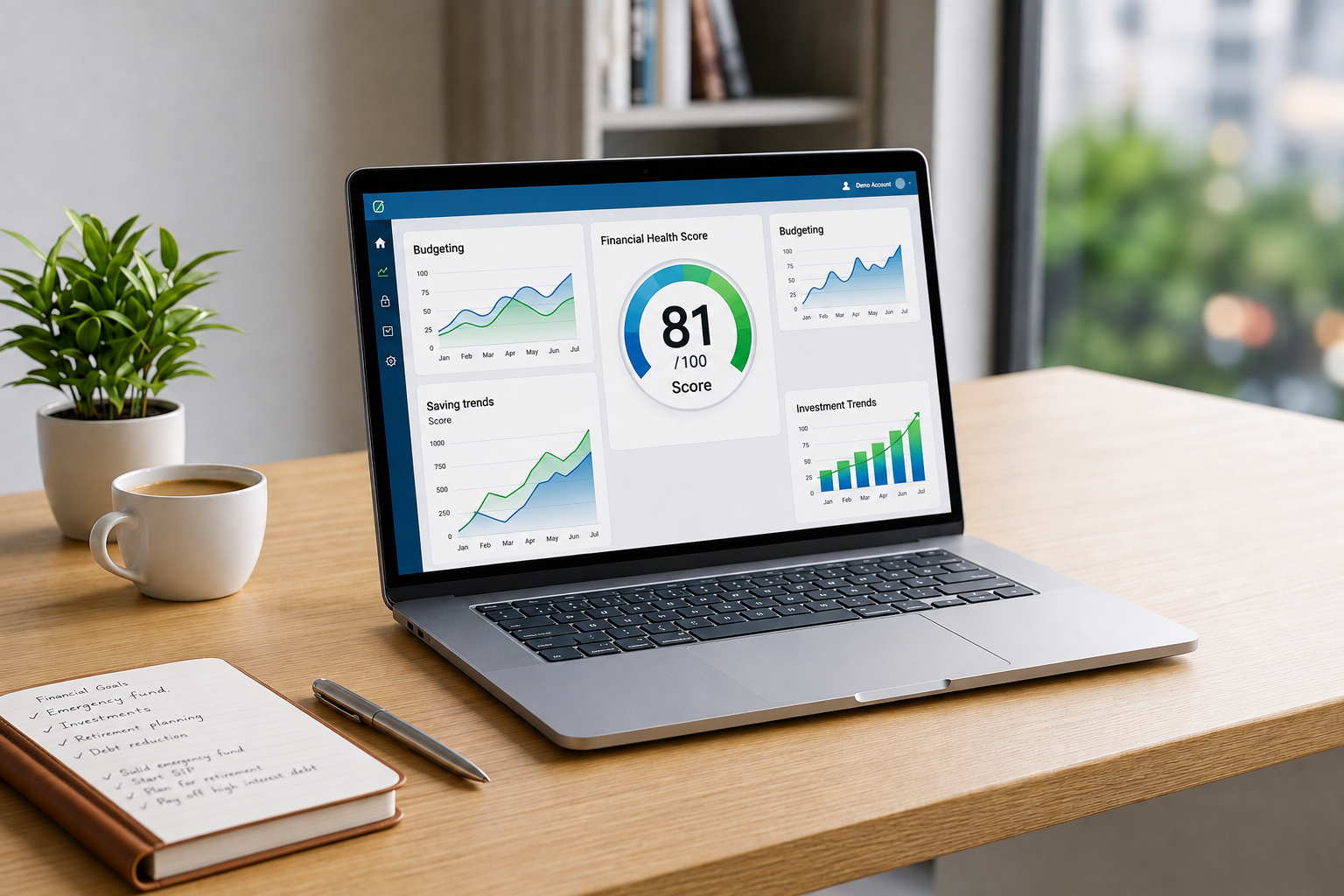
Let’s Talk Money for a Second
Okay, real talk.
When was the last time you actually sat down and looked. Really looked. At your finances?
Not just a glance at your banking app while waiting for coffee. I mean, truly sat with it.
Most people can’t remember. And honestly? That’s kind of the whole point of a financial health check. It’s that pause button we all need but rarely press. Think of it like a checkup, except instead of a stethoscope; you’re armed with bank statements and maybe a slightly nervous stomach.
The Appointment You Keep Cancelling
Here’s the thing though, we go to the dentist twice a year (some of us, anyway). We get our eyes checked. We even take the car in for an oil change without complaint.
Yet finances, the thing that quietly runs our entire lives, get ignored until something breaks.
A financial health check is basically that overdue appointment. It’s you asking honest questions: where is my money going, am I saving enough, do I even know what “enough” looks like?
Now, here’s the thing; most of us dodge this because it feels intimidating. It isn’t. It’s just numbers having a conversation with you.
So, What Actually Gets Looked At?Alright, let’s break it down a bit. When you do a proper review of your money situation, you’re generally poking around a few areas.
Your income versus your spending, obviously. Your debt, and whether it’s the manageable kind or the “wakes you up at 3am” kind.
Your savings, your emergency cushion (or lack thereof, no judgment). And your long-term stuff too, retirement accounts, investments, insurance coverage, that whole overwhelming pile.
It sounds like a lot, and yeah, it kind of is. But you don’t need to tackle it all in one sitting. Small bites. That’s how you eat an elephant, or so the saying goes.
Why Bother, Honestly?
I get skepticism. Why go digging through spreadsheets when Netflix is right there?
Well, imagine driving a car for years without ever checking the oil, the tires, the brakes. You might be fine for a while. Might.
But eventually something’s gonna give up, usually at the worst possible moment.
Money works the same way. Small cracks, like a subscription you forgot to cancel or a credit card creeping toward its limit, turn into bigger problems fast.
Catching them early saves you stress later. That’s not a guess; that’s basically just how life works.
The Emotional Side Nobody Talks About
Now this part is going to sound a bit soft but stay with me.
Money isn’t just math.
It’s tangled up with fear, pride, guilt, all sorts of feelings we don’t love admitting to.
I’ve talked to people who avoid checking their accounts because they’re scared of what they’ll find.
Sound familiar?
That avoidance, ironically, makes things worse.
Looking at the numbers, even messy ones, tends to shrink the fear.
How Often Should You Even Do This?
There’s no single magic answer, and anyone who says otherwise is probably selling you something.
Some folks like a monthly glance; others prefer a deeper dive once or twice a year.
What matters more than frequency is consistency.
Pick a rhythm and stick with it, even loosely.
Maybe it’s the first Sunday of every month with a cup of tea and your laptop open. Maybe it’s tied to tax season since you’re already knee-deep in documents anyway. Whatever works.
The goal isn’t perfection; it’s just not letting things drift for years unchecked.
What If You Find Bad News?
Let’s say you do the review and it’s not pretty. Debt’s higher than expected or savings lower than you’d like.
First off, breathe.
This happens to nearly everyone at some point, and pretending otherwise would be dishonest of me.
The value here isn’t in feeling ashamed; it’s in knowing now instead of finding out later when options are fewer.
Bad news early is manageable. Bad news late is a crisis.
There’s a real difference between the two, and catching problems while they’re small is basically the entire reason this exercise matters in the first place.
Building Habits That Actually Stick
Once you’ve done one review, the next one gets easier. Funny how that works, right?
You start noticing patterns, spending habits you didn’t realize existed, subscriptions that are quietly multiplied like rabbits.
You begin asking better questions too, not just “how much did I spend” but “why did I spend it, and did it actually make me happier.”
That shift, from reactive to reflective, tends to be the real payoff. Not the spreadsheet itself, but the awareness it drags along with it.
Where to Get a Little Extra Help
You don’t have to figure all of this out solo, by the way.
There are solid, free resources out there for building budgets, tackling debt, and setting savings goals if you want a structured starting point rather than staring at a blank page.
Wrapping Unwrapping This Up, Sort Of
So, where does that leave us? A financial health check isn’t glamorous; it won’t make you rich overnight, and it won’t fix everything in one sitting.
But it gives you something rarer than a quick fix, clarity.
And clarity, once you have it, is surprisingly hard to give back up. You start making decisions from a place of knowing rather than guessing, and that alone changes how money feels day to day.
Look, nobody wakes up excited to review their bank statements.
That’s fine. You don’t need excitement. You need honesty.
Block out an hour this week. Pour a coffee, open the accounts, and just look.
No judgment, no spiraling, just a genuine financial health check with yourself.
Future you, the one dealing with whatever comes next, will probably thank the present you for finally bothering to check.